Biocracked
←

#brain aging

2 articles
Approach: conceptual metaphor, with a natural palette.

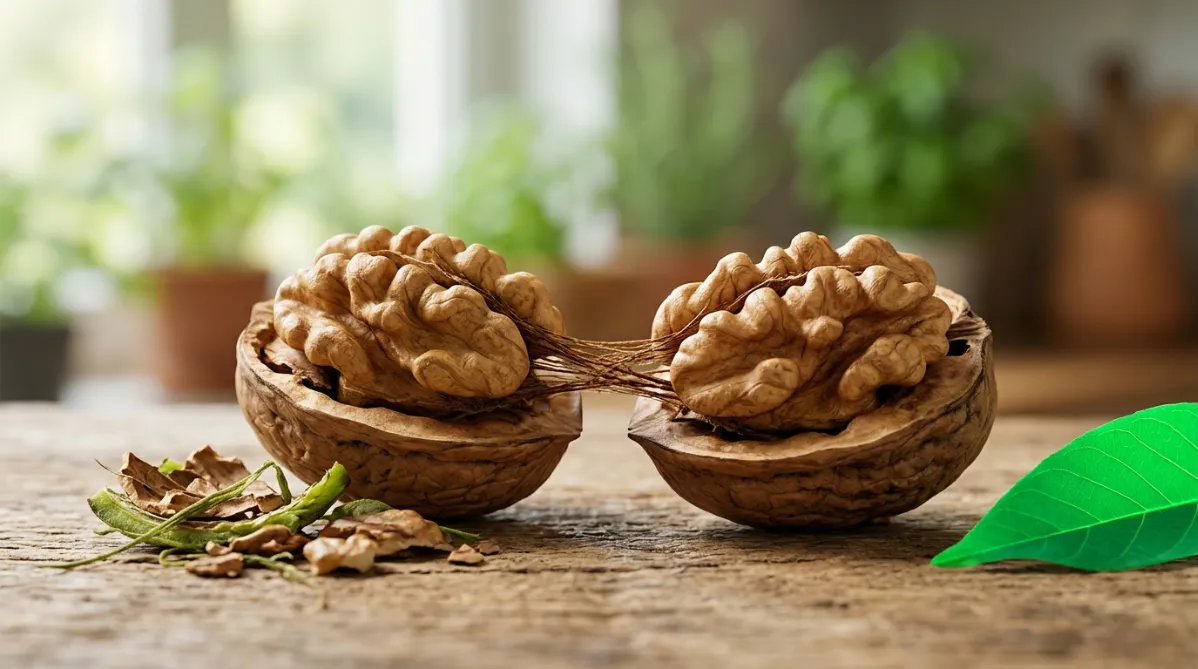
A single walnut is cracked open on a rough wooden board, and its two halves sit slightly apart. The halves are shot in tight macro from a low three-quarter angle. The walnut's brain-like folds are the focus. Between the halves, a thin cluster of fine, dark brown tannin-stained fibers stretches like a bridge. Beside it sits a small pile of shell fragments with a few strands of green walnut husk. A small, sharp, electric green (#00e676) leaf catches the light at the edge of the frame. The background is a softly blurred window-lit kitchen garden in leafy greens and warm earth tones. Soft natural daylight comes from the left and gives gentle shadows and visible texture on the nut's ridges. The mood is calm, curious and quietly scientific, with a fresh morning feel and no blue cast.
longevity

Urolithin A: o subproduto intestinal das nozes associado a uma maior espessura cortical

BY NOVA CHEN ·

Ao comer nozes, as bactérias do intestino transformam os elagitanninos em urolithinas, compostos que podem estar ligados ao modo como o cérebro envelhece. Em um sub‑estudo de ressonância magnética de dois anos do ensaio WAHA, aumentos maiores de urolithin A, urolithin C e urolithin C glucuronídeo foram associados à preservação da espessura cortical em quem consumia nozes, sobretudo nas regiões do hemisfério direito. O efeito foi mais pronunciado em indivíduos com metabótipo B. Trata‑se apenas de uma associação dentro de um ensaio randomizado, não de prova de causalidade, e nada disso diz diretamente sobre suplementos de urolithin A. A seguir, veja o que os dados realmente mostram, quem pode se interessar e quem deve manter o ceticismo.
Approach: Macro science, with a Bold color field palette.

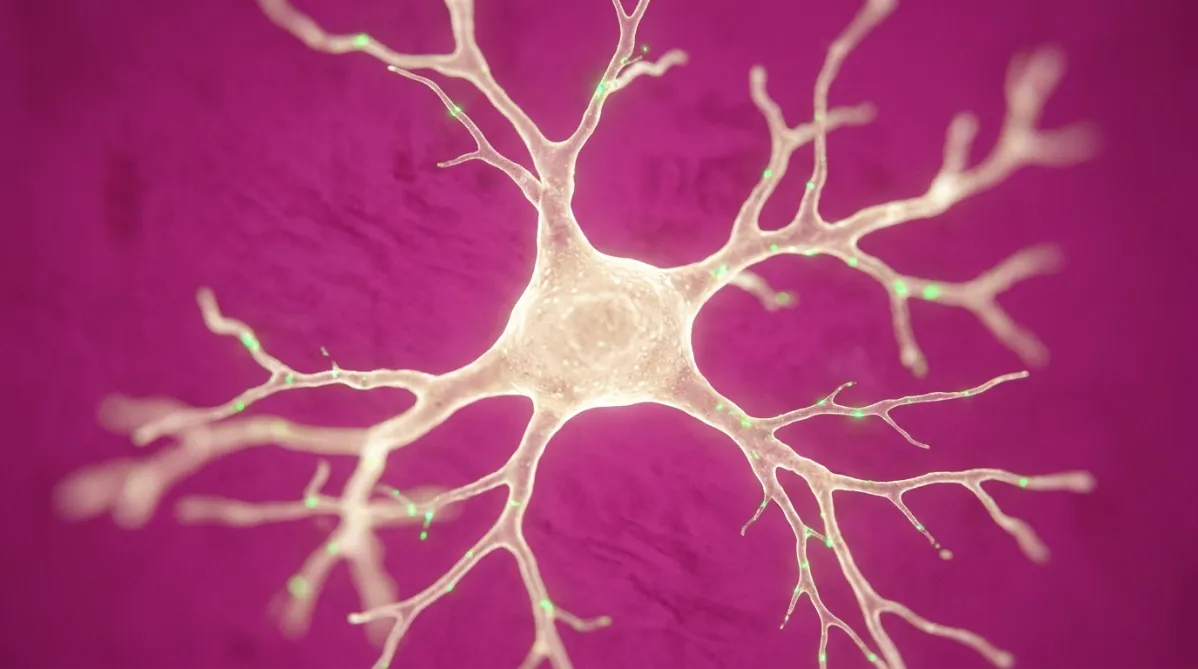
Extreme close-up microscopy-style image of a single microglial cell with fine, branching processes, rendered with the real texture of fluorescence-stained tissue: translucent, slightly granular cell body, delicate ramified arms reaching across the frame. Shot from straight overhead through a microscope objective with shallow depth of field, so the outer branches soften into blur. The cell is a luminous, warm ivory-white with a few small electric green (#00e676) points of light along its branches. Behind it is a saturated, even magenta backdrop with subtle tissue grain. Lighting is crisp and backlit, with gentle glow around the edges and no harsh shadows. The mood is curious and precise, with a quiet sense of renewal. No text or labels.
longevity

Estudo em Camundões: NR Rejuveneceu Células Cerebrais Envelhecidas

BY NOVA CHEN ·

Um estudo recém‑publicado na *GeroScience* avaliou camundões de 22 meses que receberam nicotinamida ribosídeo (NR) durante oito semanas. Os animais apresentaram melhor desempenho em testes de memória e na construção de ninhos, e as células imunes do cérebro passaram a se assemelhar às de camundões jovens. É importante lembrar que se trata de pesquisa em animais, a dose utilizada (400 mg/kg) é muito superior à consumida por pessoas, e o experimento incluiu apenas machos. A seguir, analisamos as mudanças observadas na microglia, as limitações do estudo e o que esses resultados podem significar para quem usa NR.

This page is available in